|
For
hundreds of million years Kashmir Valley remained
under Tethya sea and the
high sedimentary-rock hills seen in the valley now
were once under water. Geologists have come to
believe that Kashmir Valley was earlier affected by
earthquakes. Once there was such a devastating
earthquake that it broke open the mountain wall at
Baramulla. and the water of the Satisar lake flowed
out leaving behind lacustrine mud on the margins of
the mountains known as karewas. Thus came into existence
the oval but irregular Valley of Kashmir. The
karewas being in fact the remnants
of this lake confirm this view. The karewas are
found mostly to the west of the river Jhelum where
these table-lands attain a height of about 380
meters above the level of the Valley. These karewas
protrude towards the east and look like
tongue-shaped spurs with deep ravines.

Ancient
legends and popular traditions say that Samdimat
Nagar, capital of the kingdom of Sundra Sena, was
submerged as a result of an earthquake, and the
water that filled the area formed the Wular Lake,
the largest fresh water lake in India. The oldest
igneous rocks are still found at Shankaracharya
hill. When the whole Valley of Kashmir was under
water this
hillock was the first piece of dry land lying in the
form of an igneous island.
1. Lignite. It is an
inferior quality of coal which is found in the valley of Kashmir at Nichahama,
Baramulla, Handwara, Chowkibal, Ferozepur nullah, Nagbal, Tangmarg, Raithan,
Badgam tehsil, Laligang and Lolab valley. Lignite is a blackbrown coal that is
intermediate in coalification between peat and sub-bituminous coal which has a
calorific value less than 8300BTU/lb, on a moist mineral free basis. According
to the report of the Geological Survey of India, there are lignite coal deposits
of about 5 crore 60 lakh tons in the valley. Drilling operations were started
first in the Nicahhom- Chowkibal area where the reserves were estimated at 4. 5
million tons to a depth of 40 metres. Lignite is used as a fuel in the valley of
Kashmir.
2. Limestone. All the
three regions of the State i.e. Jammu, Kashmir and Ladakh have deposits of
different ages and grades of Limestone. The Limestone of Kashmir is of high
quality and is used in the manufacture of cement at Wuyan and Khrew. These
deposits exist in Anantnag, Achhabal, Doru, Verinag, Biru, Sonamarg, Ajas, Wuyau,
Khrew and Loduv. It is also used as building stone and mortar.
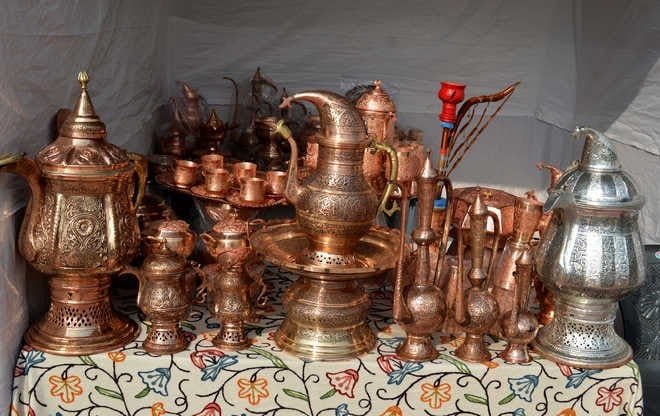
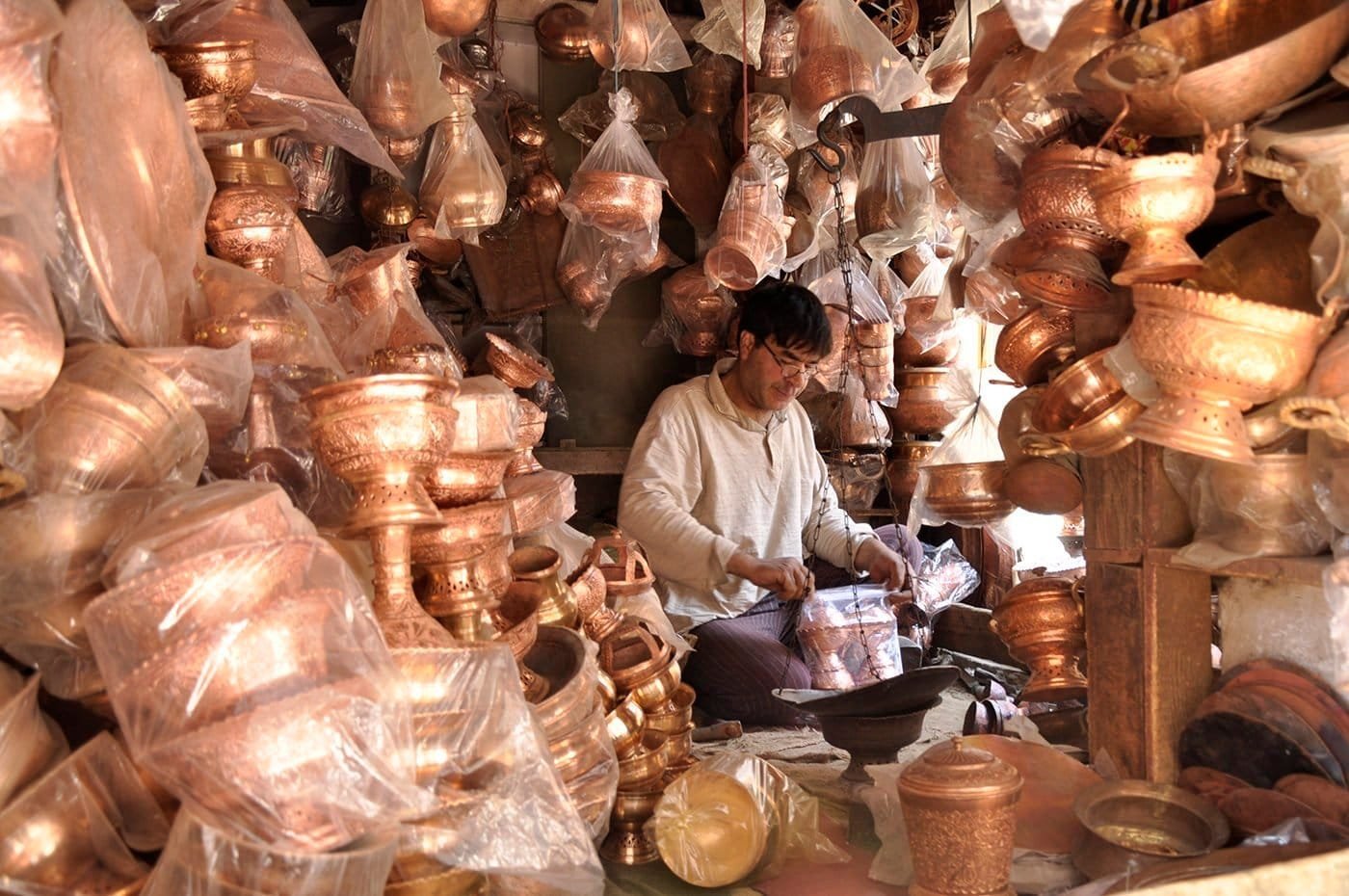
3. Copper ores are found
at Aishmuqam, Shubbar area (Anantnag), Lashtil hill spurs (Baramulla), Handwara,
Sumbal, Kangan andLolab valley in the province of Kashmir.
4. Iron-ore deposits occur
in Sharda (Karnah tehsil), Khrewa, Haral (Handwara), Uri tehsil, Garez (Sopore
tehsil) and Lolab valley in Kashmir.
5. Gypsum. It is used for
making plaster of paris and chalksticks. The Kashmir province has gypsum
deposits at Lachhipora, Baramulla, Anantnag, Liddipora and Kathia Nullah (Uri).
There is total reserve of about 4 million tons of gypsum in the State.
6. Ochre. It is used in
paints and varnishes etc. There are extensive deposits of ochre in Nur Khawn,
Ratasar and Jhaggi in the Uri tehsil. About 4 lak tons of ochre have been found
in the State so far.
7. Zinc and Nickelarfound
at Buniyar (Baramulla).
8. Fuller's Earth is used
in the manufacture of country soap and for filling paper. It is found in Rampur
near Baramulla
9. Slate Stone is found in
abundance in the valley of Kashmir.
10. Graphite is used in
the manufacture of lead pencils and is found in Bararipora, Uri, Karnah, Malogam,
Piran in the province of Kashmir
11. Sulphur is found in
Pagga valley in Ladakh. In spring water, it is found at Anantnag and Khrewa. The
estimated deposits of sulphur in the State are 2,00,000 tons.
12. Marble. Large deposits of marble have been
found at Drugmalla, Zirahama, Oura and Trehgam in Kupwara district of Kashmir.
This is light brown to dirty grey in colour. This is being used commonly in
buildings these days.
|